• Optogenomic Interfaces: Bridging Biological Networks With the Electronic Digital World, #IEEE, 2019

    #NanoBio
    Optogenomic Interfaces: Bridging Biological Networks With the Electronic Digital World, #IEEE, 2019 #NanoBio
    Tipo di file: pdf
    0 Commenti 0 condivisioni
  • 2010, #NSF Nanotechnology Research Directions for Societal Needs in 2020 - Retrospective & Outlook
    2010, #NSF Nanotechnology Research Directions for Societal Needs in 2020 - Retrospective & Outlook
    Tipo di file: pdf
    0 Commenti 0 condivisioni
  • Convergence of Knowledge, Technology, and Society- Beyond Convergence of Nano-Bio-Info-Cognitive Technologies, 2013 #NBIC #NSF
    Convergence of Knowledge, Technology, and Society- Beyond Convergence of Nano-Bio-Info-Cognitive Technologies, 2013 #NBIC #NSF
    Tipo di file: pdf
    0 Commenti 0 condivisioni
  • The Grand Politics of Technoscience - Bringing Visibility to the Invisible: Towards A Social Understanding of Nanotechnology, 2003
    The Grand Politics of Technoscience - Bringing Visibility to the Invisible: Towards A Social Understanding of Nanotechnology, 2003
    Tipo di file: pdf
    0 Commenti 0 condivisioni
  • Nanoscale Science & Engineering at #NSF, #NNI 2019

    Nanoscale Science & Engineering at #NSF, #NNI 2019
    Tipo di file: pdf
    0 Commenti 0 condivisioni

  • #Source #NSF, #DOC

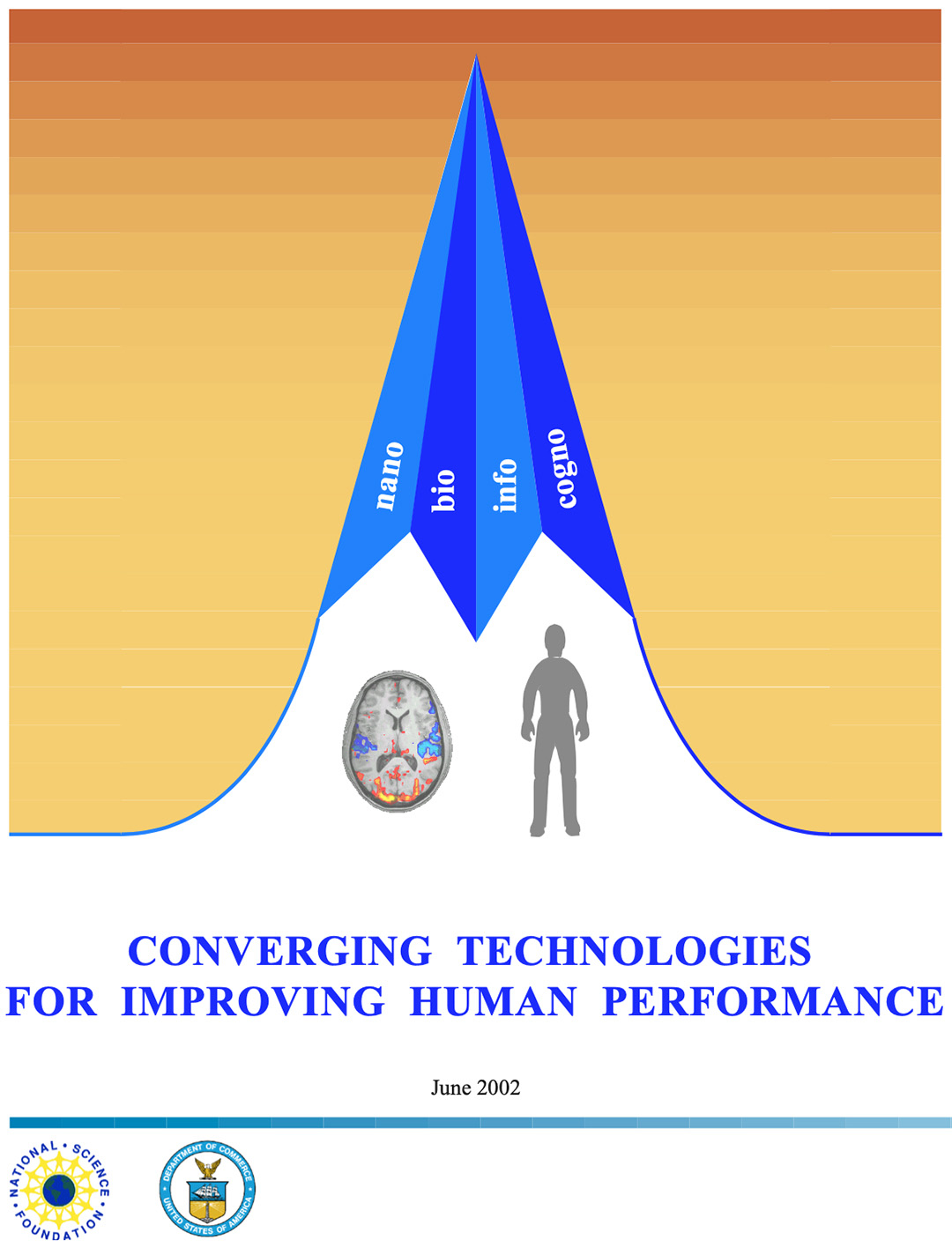
    Converging Technologies for Improving Human Performance, #NBIC1, 2002:

    “We stand at the threshold of a new renaissance in science and technology, based on a comprehensive understanding of the structure and behavior of matter from the nanoscale up to the most complex system yet discovered, the human brain....

    The phrase ‘convergent technologies’ refers to the synergistic combination of four major ‘NBIC’ (nano-bio-info-cogno) provinces of science and technology, each of which is currently progressing at a rapid rate:

    (a) nanoscience and nanotechnology;
    (b) biotechnology and biomedicine, including genetic engineering;
    (c) information technology, including advanced computing and communications;
    (d) cognitive science, including cognitive neuroscience….

    Convergence of diverse technologies is based on material unity at the nanoscale and on technology integration from that scale.

    The building blocks of matter that are fundamental to all sciences originate at the nanoscale….

    Science can now understand the ways in which atoms combine to form complex molecules, and how these in turn aggregate according to common fundamental principles to form both organic and inorganic structures.

    Technology can harness natural processes to engineer new materials, biological products, and machines from the nanoscale up to the scale of meters.
    The same principles will allow us to understand and, when desirable, to control the behavior both of complex microsystems, such as neurons and computer components, and macrosystems, such as human metabolism and transportation vehicles.”

    ....

    “At this moment in the evolution of technical achievement, improvement of human performance through integration of technologies becomes possible.”
    NSF NBIC1

    “NBIC convergence can give us the means to deal successfully with these challenges by substantially enhancing human mental, physical, and social abilities.

    Better understanding of the human body and development of tools for direct human-machine interaction have opened completely new opportunities….

    At the nanoscale, atoms and simple molecules connect into complex structures like DNA, the subsystems of the living cell, or the next generation of microelectronic components.
    At the microscale, cells such as the neurons and glia of the human brain interact to produce the transcendent phenomena of memory, emotion, and thought itself….

    The ability to control the genetics of humans, animals, and agricultural plants will greatly benefit human welfare, in accordance with a widespread consensus about ethical, legal, and moral issues….

    The human body will be more durable, healthy, energetic, easier to repair, and resistant to many kinds of stress, biological threat, and aging process.”

    #Convergence #NanoBio
    #Source #NSF, #DOC Converging Technologies for Improving Human Performance, #NBIC1, 2002: “We stand at the threshold of a new renaissance in science and technology, based on a comprehensive understanding of the structure and behavior of matter from the nanoscale up to the most complex system yet discovered, the human brain.... The phrase ‘convergent technologies’ refers to the synergistic combination of four major ‘NBIC’ (nano-bio-info-cogno) provinces of science and technology, each of which is currently progressing at a rapid rate: (a) nanoscience and nanotechnology; (b) biotechnology and biomedicine, including genetic engineering; (c) information technology, including advanced computing and communications; (d) cognitive science, including cognitive neuroscience…. Convergence of diverse technologies is based on material unity at the nanoscale and on technology integration from that scale. The building blocks of matter that are fundamental to all sciences originate at the nanoscale…. Science can now understand the ways in which atoms combine to form complex molecules, and how these in turn aggregate according to common fundamental principles to form both organic and inorganic structures. Technology can harness natural processes to engineer new materials, biological products, and machines from the nanoscale up to the scale of meters. The same principles will allow us to understand and, when desirable, to control the behavior both of complex microsystems, such as neurons and computer components, and macrosystems, such as human metabolism and transportation vehicles.” .... “At this moment in the evolution of technical achievement, improvement of human performance through integration of technologies becomes possible.” NSF NBIC1 “NBIC convergence can give us the means to deal successfully with these challenges by substantially enhancing human mental, physical, and social abilities. Better understanding of the human body and development of tools for direct human-machine interaction have opened completely new opportunities…. At the nanoscale, atoms and simple molecules connect into complex structures like DNA, the subsystems of the living cell, or the next generation of microelectronic components. At the microscale, cells such as the neurons and glia of the human brain interact to produce the transcendent phenomena of memory, emotion, and thought itself…. The ability to control the genetics of humans, animals, and agricultural plants will greatly benefit human welfare, in accordance with a widespread consensus about ethical, legal, and moral issues…. The human body will be more durable, healthy, energetic, easier to repair, and resistant to many kinds of stress, biological threat, and aging process.” #Convergence #NanoBio
    Tipo di file: pdf
    0 Commenti 0 condivisioni
  • #NSF #NBIC #Convergence #Quantum #NanoTechnology #BioTechnology #InfoTech #CognitiveSciences
    #NSF #NBIC #Convergence #Quantum #NanoTechnology #BioTechnology #InfoTech #CognitiveSciences
    0 Commenti 0 condivisioni
  • #NSF #NBIC #Convergence #Quantum #NanoTechnology #BioTechnology #InfoTech #CognitiveSciences
    #NSF #NBIC #Convergence #Quantum #NanoTechnology #BioTechnology #InfoTech #CognitiveSciences
    1 Commenti 0 condivisioni
  • #Source #NSF, #DOC, Converging Technologies for Improving Human Performance, #NBIC1, 2002:

    “We stand at the threshold of a new renaissance in science and technology, based on a comprehensive understanding of the structure and behavior of matter from the nanoscale up to the most complex system yet discovered, the human brain....

    The phrase ‘convergent technologies’ refers to the synergistic combination of four major ‘NBIC’ (nano-bio-info-cogno) provinces of science and technology, each of which is currently progressing at a rapid rate:

    (a) nanoscience and nanotechnology;
    (b) biotechnology and biomedicine, including genetic engineering;
    (c) information technology, including advanced computing and communications;
    (d) cognitive science, including cognitive neuroscience….

    Convergence of diverse technologies is based on material unity at the nanoscale and on technology integration from that scale.

    The building blocks of matter that are fundamental to all sciences originate at the nanoscale….

    Science can now understand the ways in which atoms combine to form complex molecules, and how these in turn aggregate according to common fundamental principles to form both organic and inorganic structures.

    Technology can harness natural processes to engineer new materials, biological products, and machines from the nanoscale up to the scale of meters.
    The same principles will allow us to understand and, when desirable, to control the behavior both of complex microsystems, such as neurons and computer components, and macrosystems, such as human metabolism and transportation vehicles.”

    ....

    “At this moment in the evolution of technical achievement, improvement of human performance through integration of technologies becomes possible.”
    NSF NBIC1

    “NBIC convergence can give us the means to deal successfully with these challenges by substantially enhancing human mental, physical, and social abilities.

    Better understanding of the human body and development of tools for direct human-machine interaction have opened completely new opportunities….

    At the nanoscale, atoms and simple molecules connect into complex structures like DNA, the subsystems of the living cell, or the next generation of microelectronic components.
    At the microscale, cells such as the neurons and glia of the human brain interact to produce the transcendent phenomena of memory, emotion, and thought itself….

    The ability to control the genetics of humans, animals, and agricultural plants will greatly benefit human welfare, in accordance with a widespread consensus about ethical, legal, and moral issues….

    The human body will be more durable, healthy, energetic, easier to repair, and resistant to many kinds of stress, biological threat, and aging process.”

    #Convergence #Nano-Bio

    #Source #NSF, #DOC, Converging Technologies for Improving Human Performance, #NBIC1, 2002: “We stand at the threshold of a new renaissance in science and technology, based on a comprehensive understanding of the structure and behavior of matter from the nanoscale up to the most complex system yet discovered, the human brain.... The phrase ‘convergent technologies’ refers to the synergistic combination of four major ‘NBIC’ (nano-bio-info-cogno) provinces of science and technology, each of which is currently progressing at a rapid rate: (a) nanoscience and nanotechnology; (b) biotechnology and biomedicine, including genetic engineering; (c) information technology, including advanced computing and communications; (d) cognitive science, including cognitive neuroscience…. Convergence of diverse technologies is based on material unity at the nanoscale and on technology integration from that scale. The building blocks of matter that are fundamental to all sciences originate at the nanoscale…. Science can now understand the ways in which atoms combine to form complex molecules, and how these in turn aggregate according to common fundamental principles to form both organic and inorganic structures. Technology can harness natural processes to engineer new materials, biological products, and machines from the nanoscale up to the scale of meters. The same principles will allow us to understand and, when desirable, to control the behavior both of complex microsystems, such as neurons and computer components, and macrosystems, such as human metabolism and transportation vehicles.” .... “At this moment in the evolution of technical achievement, improvement of human performance through integration of technologies becomes possible.” NSF NBIC1 “NBIC convergence can give us the means to deal successfully with these challenges by substantially enhancing human mental, physical, and social abilities. Better understanding of the human body and development of tools for direct human-machine interaction have opened completely new opportunities…. At the nanoscale, atoms and simple molecules connect into complex structures like DNA, the subsystems of the living cell, or the next generation of microelectronic components. At the microscale, cells such as the neurons and glia of the human brain interact to produce the transcendent phenomena of memory, emotion, and thought itself…. The ability to control the genetics of humans, animals, and agricultural plants will greatly benefit human welfare, in accordance with a widespread consensus about ethical, legal, and moral issues…. The human body will be more durable, healthy, energetic, easier to repair, and resistant to many kinds of stress, biological threat, and aging process.” #Convergence #Nano-Bio

    Tipo di file: pdf
    1 Commenti 0 condivisioni